
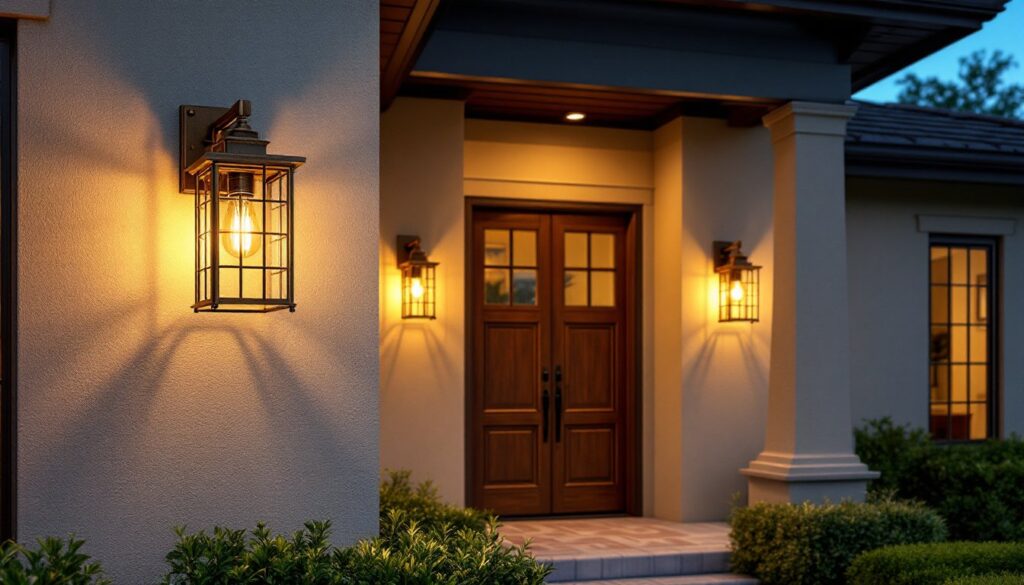
Antique brass outdoor lighting delivers what few finishes can: a warm patina that ages gracefully instead of looking worn. Unlike polished metals that show every fingerprint or painted fixtures that chip and fade, antique brass develops character over time. It bridges traditional and contemporary architecture without feeling out of place on a Craftsman porch or a modern farmhouse entryway. For homeowners seeking fixtures that elevate curb appeal while standing up to weather and UV exposure, antique brass hits the mark.
Table of Contents
ToggleKey Takeaways
- Antique brass outdoor lighting develops a rich patina over time that hides scratches and water spots, eliminating the maintenance burden of polished metals while delivering timeless curb appeal.
- Wall lanterns should be one-quarter to one-third the height of the door they illuminate and mounted 66–72 inches from the ground for optimal proportions and visual impact.
- Select LED bulbs with 90+ CRI and 2700K–3000K color temperature to complement antique brass fixtures while ensuring long-lasting performance and warm-toned light quality.
- Marine-grade brass (CZ132 or C46400 alloy) rated for wet locations outperforms standard finishes in coastal environments and direct sun exposure.
- Antique brass unifies mixed-metal exteriors and pairs beautifully with natural materials like brick, stone, and wood, making it ideal for both traditional and modern farmhouse styles.
- Routine care requires only a damp cloth and mild soap—avoid polishing—and replace gaskets every 3–5 years to prevent water intrusion and maintain the fixture’s longevity.
Why Antique Brass Is the Perfect Finish for Outdoor Fixtures
Antique brass is a living finish, it reacts to air and moisture, developing a deeper, richer tone that hides minor scratches and water spots. This makes it ideal for exteriors where polished finishes would require constant maintenance.
The finish is created by applying a darkening agent (usually a chemical patina) to raw brass, then sealing or leaving it unlacquered. Unlacquered antique brass will continue to darken and develop green undertones (verdigris) in humid climates, while lacquered versions maintain a more consistent appearance. Both hold up better than oil-rubbed bronze in direct sun, which can fade to a flat brown.
Antique brass pairs well with natural materials: brick, stone, wood siding, and stucco. It reads as neither too formal nor too casual, which is why it’s a go-to for exterior spot lighting and porch fixtures alike. The warmth of the brass tempers the industrial edge of Edison bulbs and complements the glow of warm white LEDs (2700K–3000K).
From a durability standpoint, brass itself is corrosion-resistant. Marine-grade brass fixtures (often marked CZ132 or C46400 alloy) perform best in coastal environments. Standard brass holds up fine in most climates as long as the fixture is rated for wet locations (not just damp). Check the UL listing, UL 1598 covers luminaires for outdoor use.
Best Types of Antique Brass Outdoor Lighting for Every Home Style
Wall Lanterns and Sconces
Wall lanterns are the workhorses of outdoor lighting. They flank entryways, illuminate garage doors, and mark transitions between spaces. Antique brass sconces with clear or seeded glass work on Colonial, Craftsman, and transitional homes. For modern farmhouses, look for fixtures with cleaner lines, minimal scrollwork, simple backplates.
Sizing matters. A fixture should be roughly one-quarter to one-third the height of the door it’s lighting. For an 80-inch door, that’s 20–27 inches tall. Mount sconces so the center of the fixture sits at 66–72 inches from the ground, roughly eye level. If the fixture will be viewed from the street, consider outdoor lighting sconces with downward-facing shades to reduce glare.
Down-facing sconces (also called half-lanterns) reduce light pollution and keep illumination on walkways instead of in neighbors’ windows. Up-and-down sconces (sometimes called dual-direction or bi-directional) create dramatic wall-washing effects on textured siding or stone.
For covered porches, a damp-rated fixture is sufficient. Exposed walls need wet-rated fixtures with sealed gaskets. Antique brass works beautifully in both contexts, and recent trends in outdoor wall lighting show a shift toward larger-scale fixtures that make a statement.
Hanging Pendants and Porch Lights
Pendants and porch ceiling fixtures bring antique brass into overhead spaces. For deep porches (10+ feet), a pendant on a chain or rod creates visual interest and draws the eye upward. Globe pendants and cage-style fixtures (inspired by Victorian gaslights) fit homes with historical details.
Ceiling-mount fixtures, flush-mounts and semi-flush-mounts, work for lower ceilings (under 8 feet) or shallow overhangs. A semi-flush leaves 4–8 inches of clearance, enough to show off the fixture’s profile without sacrificing headroom.
Wiring and support: Most porch ceilings have a standard electrical box rated for 50 pounds. Heavier fixtures (cast brass can weigh 15–25 pounds) may require a fan-rated box or additional blocking between joists. If you’re replacing an existing fixture, confirm the box is secure before hanging anything heavy.
Antique brass pairs especially well with warm-toned wood ceilings (beadboard, tongue-and-groove cedar). For painted ceilings, it contrasts nicely with haint blue, a soft blue-green historically used on Southern porches to ward off insects, a tradition highlighted in regional design for its aesthetic and practical benefits.
How to Choose the Right Antique Brass Outdoor Lighting for Your Space
Start with the fixture’s job: Task lighting (steps, doorways) needs focused beams and higher lumens. Ambient lighting (porch ceilings, wall wash) can be softer. Accent lighting (uplights on columns, landscape spots) highlights architectural details.
Lumens and wattage equivalents: For flanking a front door, aim for 800–1,200 lumens per fixture (roughly a 60–75W incandescent equivalent in LED). Porch ceiling fixtures in the 1,500–2,000 lumen range provide comfortable, even light for entertaining. Dimmers are your friend, install a low-voltage dimmer compatible with LED bulbs to adjust brightness.
Bulb type affects both light quality and maintenance. LED bulbs last 15,000–25,000 hours and resist temperature swings, but choose carefully. Cheap LEDs flicker on dimmers and produce harsh, blue-tinted light. Look for high CRI (90+) and 2700K color temperature to complement antique brass.
Glass options change the light’s character. Clear glass maximizes brightness and shows off decorative filament bulbs. Seeded or textured glass diffuses light, reducing glare and hiding the bulb. Frosted glass softens everything, good for fixtures mounted at eye level.
Consider your home’s proportions and scale. A sprawling ranch needs larger fixtures than a compact bungalow. If the fixture looks small in photos, it’ll look smaller in person. When in doubt, go one size up, undersized lighting is a common misstep.
For homes with mixed finishes (black gutters, stainless hardware), antique brass can unify the palette. Mixing metals is acceptable as long as the brass is the dominant exterior finish. Pair it with matte black accents (house numbers, mailbox) for a modern edge, or stick with all warm metals (copper downspouts, bronze door hardware) for consistency, much like the approach seen in traditional home settings where material harmony drives design.
Installation and Maintenance Tips for Long-Lasting Beauty
Installation basics: Always kill power at the breaker, not just the switch. Use a non-contact voltage tester to confirm the wires are dead. Outdoor boxes should have a weatherproof gasket (often foam or rubber) between the fixture and the wall. If the old fixture didn’t have one, add it.
Most fixtures mount with a crossbar (a metal bracket screwed into the electrical box). The crossbar supports the fixture weight while you connect wires. Use wire nuts rated for outdoor use and wrap connections with electrical tape for added moisture protection. Some inspectors require silicone-filled wire nuts in wet locations, check local codes.
If you’re replacing an old fixture and the screw holes don’t line up, a universal mounting plate adapts most boxes. For pendant installations, confirm the chain or rod length leaves adequate clearance (usually 7 feet minimum from finished floor).
Safety note: Exterior wiring exposed to weather should be 14 AWG or 12 AWG copper with appropriate insulation (THHN/THWN-2). If you see cloth-wrapped wiring or ungrounded boxes, call a licensed electrician. This is not a DIY fix.
Maintenance: Antique brass doesn’t require polishing, patina is part of the appeal. For routine cleaning, wipe fixtures with a damp microfiber cloth and mild dish soap. Avoid abrasive cleaners or brass polish, which strip the patina.
If the finish develops white or green corrosion (common in coastal areas), mix equal parts white vinegar and water, apply with a soft brush, rinse, and dry. For stubborn spots, a paste of baking soda and lemon juice works without damaging the base metal.
Lacquered finishes can crack over time, especially in freeze-thaw cycles. Small cracks allow moisture in, leading to uneven tarnish. You can strip and re-lacquer (a project best done indoors with proper ventilation and spray lacquer), or embrace the patina by removing all lacquer with acetone and letting the brass age naturally.
Replace gaskets and seals every 3–5 years to prevent water intrusion. Check the fixture after heavy storms, water inside the globe means the seal has failed. Most replacement parts (globes, gaskets, finials) are available from the manufacturer or specialty lighting suppliers.
Bulbs should be replaced promptly when they burn out. Leaving a dead bulb in place can trap moisture. When swapping bulbs, wear gloves, skin oils on LED drivers can shorten lifespan.
For pest prevention, consider garden planning strategies that reduce insects around your lighting, as certain plantings naturally deter bugs drawn to outdoor fixtures at night.
Conclusion
Antique brass outdoor lighting offers a rare combination: timeless aesthetics, real-world durability, and low upkeep. It’s a finish that improves with age rather than fighting it. Whether flanking a front door, hanging over a porch, or accenting architectural details, these fixtures deliver warmth and character that black or brushed nickel can’t match. Choose thoughtfully, install carefully, and let the patina tell the story.