
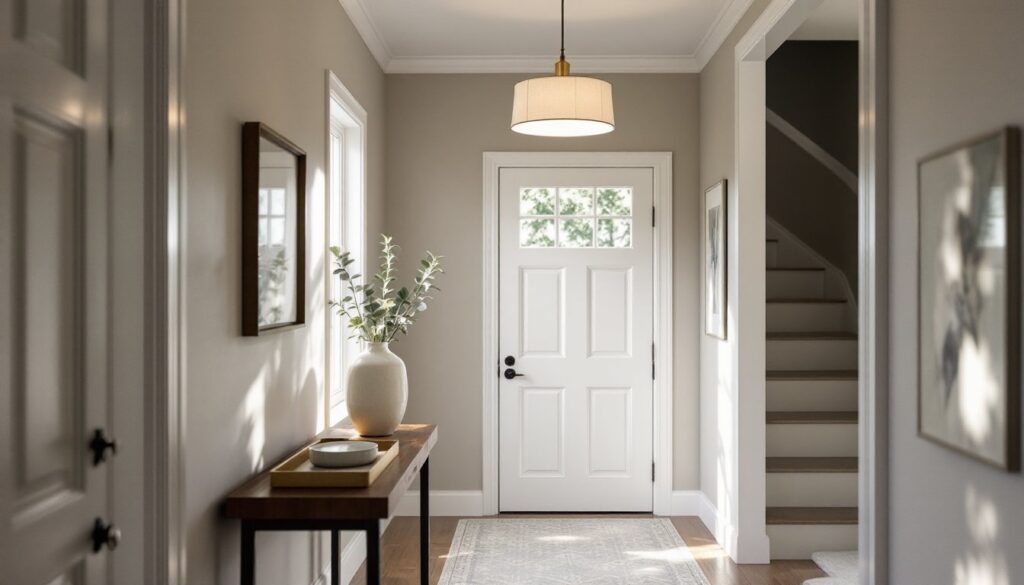
The entryway sets the tone for your entire home. It’s the first thing guests see and the last thing you notice before heading out. But too many entryways suffer from builder-grade flush mounts that do nothing for the space. A well-chosen pendant light can completely change the feel, adding height, drama, and a sense of polish that makes your home feel intentional. Whether you’re swapping an outdated fixture or building from scratch, pendant lighting offers flexibility in style, scale, and function that few other fixture types can match.
Table of Contents
ToggleKey Takeaways
- Entryway pendant lighting fills vertical space naturally in high-ceiling entryways (8–12 feet or more), drawing the eye upward and creating a polished focal point that standard flush mounts cannot achieve.
- Determine your pendant fixture diameter by adding your entryway’s length and width in feet and converting to inches; for example, a 6×10 foot space calls for approximately a 16-inch diameter pendant.
- Hang your pendant light a minimum of 7 feet above the floor for safety, and adjust the drop to 30–36 inches from the ceiling in 9–10-foot spaces or 48–60 inches in two-story entryways to maintain proportional visual balance.
- Modern and minimalist pendant styles feature clean lines and matte finishes, while traditional options like lantern pendants with seeded glass complement colonial or farmhouse architecture.
- Before installing pendant lighting, turn off power at the breaker (not just the wall switch), verify the fixture weight is under 50 pounds for standard electrical boxes, and gather essential tools including a voltage tester, wire strippers, and an appropriately tall ladder.
- Swap outdated fixtures by matching hot-to-hot and neutral-to-neutral wires, securing connections with wire nuts, and tucking wires into the electrical box before mounting the canopy—no permit required for simple fixture replacement on existing circuits.
Why Pendant Lights Are Perfect for Entryways
Entryways often have higher ceilings than other rooms, 8 to 12 feet or more in two-story homes. Standard flush or semi-flush mounts can look undersized and leave the vertical space feeling empty. Pendant lights fill that void naturally by hanging down into the room, drawing the eye upward and making the ceiling feel taller.
Unlike recessed cans or track lighting, pendants provide focused downlight where you need it most: over a console table, runner rug, or seating bench. They also double as statement pieces, reflecting your home’s style before visitors even reach the living room.
Another practical benefit: pendants are easier to replace or update than hardwired ceiling fixtures that require drywall repair. Most use a standard electrical box and canopy, so swapping styles down the road is a straightforward DIY task. If you’re working with an entryway that connects to outdoor spaces, coordinating your interior pendant with exterior sconce styles can create a cohesive transition from outside to in.
From a code perspective, entryway lighting must provide adequate illumination for safe navigation, especially near stairs. The 2021 International Residential Code (IRC) requires at least one switched lighting outlet in hallways and entryways. Pendants easily meet this requirement while adding design value most code-minimum fixtures don’t deliver.
Choosing the Right Size and Height for Your Entryway Pendant
Getting the scale wrong is the fastest way to make a pendant look awkward. The fixture should feel proportional to the room, not so large it overwhelms the space, but not so small it disappears.
A general rule: add the length and width of your entryway (in feet), then convert that sum to inches. That’s a good starting diameter for your pendant. For example, a 6-foot by 10-foot entryway suggests a fixture around 16 inches in diameter. For longer or narrower entries, consider a linear chandelier or multiple smaller pendants spaced evenly.
Hanging height depends on ceiling height and clearance needs. The bottom of the pendant should hang 7 feet minimum above the floor to avoid head strikes, per standard safety guidelines. In homes with 9- to 10-foot ceilings, aim for the fixture to hang about 30 to 36 inches down from the ceiling. In two-story entryways with 12- to 18-foot ceilings, you can go larger and lower, sometimes 48 to 60 inches of drop, to fill the space.
If your entryway has a console or entry table below the light, leave 30 to 34 inches of clearance between the tabletop and the bottom of the fixture. This creates visual balance and keeps the light from feeling cramped.
Always account for door swing clearance. If the front door opens inward, make sure the pendant won’t interfere. And if you have a staircase in the entryway, check that the fixture doesn’t hang into the path of travel at any point along the stairs. Many modern pendant groupings use adjustable downrods or cord lengths, giving you flexibility during installation.
Popular Pendant Lighting Styles for Entryways
Modern and Minimalist Designs
Clean lines, geometric shapes, and matte finishes define this category. Think drum shades in linen or fabric, globe pendants in opal glass or brushed metal, and cage-style fixtures with exposed bulbs. These work especially well in contemporary homes with neutral palettes and open floor plans.
Sputnik chandeliers and linear bar pendants also fall into the modern camp. They add visual interest without heavy ornamentation, and they scale up or down easily depending on your space. Black, brass, and brushed nickel are the go-to finishes here.
For a minimalist entryway, choose fixtures with integrated LED modules or Edison-style bulbs that provide warm light (2700K to 3000K color temperature). Avoid overly ornate details, let the form and material do the talking. Interior design enthusiasts often turn to design-forward publications for inspiration on pairing minimalist lighting with architectural details.
Traditional and Classic Options
If your home has colonial, craftsman, or farmhouse bones, a traditional pendant will feel more at home. Lantern-style pendants with clear or seeded glass are a staple, they work indoors and echo the look of outdoor sconces flanking your front door.
Drum chandeliers with fabric shades and decorative trim, candelabra-style fixtures with multiple arms, and wrought iron or oil-rubbed bronze pendants all lean traditional. These styles often feature warmer finishes and more decorative elements like scrollwork, candle sleeves, or chain suspension.
Don’t shy away from mixing metals if your hardware and trim are varied throughout the home. A bronze pendant can coexist with brushed nickel door hinges as long as the overall palette feels cohesive. When selecting traditional fixtures, consider the home’s era and architectural details, crown molding, wainscoting, and trim style should inform your choice. Many homeowners reference trusted sources like interior design magazines to see how classic fixtures are styled in real entryways.
Installation Tips for DIY Homeowners
Before you start, turn off power at the breaker, not just the wall switch. Use a non-contact voltage tester to confirm the circuit is dead. Entryway fixtures are often on the same circuit as porch or hallway lights, so double-check.
Most pendant lights hang from a standard round or octagonal electrical box rated for the fixture’s weight. If your new pendant weighs more than 50 pounds, you’ll need a fan-rated box or a box mounted to a ceiling joist or blocking. Check the fixture’s manual for weight specs.
Tools you’ll need:
- Wire strippers
- Screwdriver set (flathead and Phillips)
- Voltage tester
- Adjustable wrench or pliers
- Ladder tall enough to reach the ceiling safely
- Wire nuts (usually included with the fixture)
- Electrical tape
Step-by-step installation:
- Remove the old fixture. Unscrew the canopy, disconnect the wires (typically black to black, white to white, and ground to ground), and remove the mounting bracket.
- Install the new mounting bracket. Most pendants come with a crossbar or strap that screws into the electrical box. Make sure it’s tight, this supports the entire fixture.
- Thread the pendant wires. If the fixture uses a chain or downrod, thread the wires through before attaching it to the canopy. Adjust the hanging length now, before making electrical connections.
- Connect the wires. Match hot to hot (usually black or red), neutral to neutral (white), and ground to ground (bare copper or green). Twist the wires together clockwise, then secure with a wire nut and wrap with electrical tape.
- Tuck wires and mount the canopy. Push the connected wires gently into the electrical box, then slide the canopy up and secure it with the provided screws or collar.
- Install bulbs and test. Once the fixture is mounted, install the correct bulb type and wattage (check the label inside the fixture). Restore power and test the switch.
Safety notes:
- Wear safety glasses when working overhead.
- If you’re working on a two-story entryway with a ceiling above 10 feet, rent a scaffold or adjustable platform. Extension ladders aren’t stable enough for overhead electrical work.
- If your home was built before 1985, have an electrician inspect the wiring. Older cloth-insulated wiring can be brittle and may not support modern fixtures safely.
- Permits: Most jurisdictions don’t require a permit for a simple fixture swap on an existing circuit. But, if you’re adding a new circuit, moving the electrical box, or doing structural work to add blocking, you’ll need a permit and likely an inspection. Check with your local building department.
If your entryway lacks an electrical box entirely, hiring a licensed electrician to rough one in is the safest route. Running new wire through finished walls and ceilings is tricky and may require drywall repair.
Conclusion
Choosing and installing entryway pendant lighting isn’t just about swapping a fixture, it’s about creating a focal point that makes your home feel finished. Get the size and height right, pick a style that fits your home’s architecture, and don’t skip the prep work during installation. Whether you go modern or traditional, the right pendant will make your entryway feel intentional every time you walk through the door.