
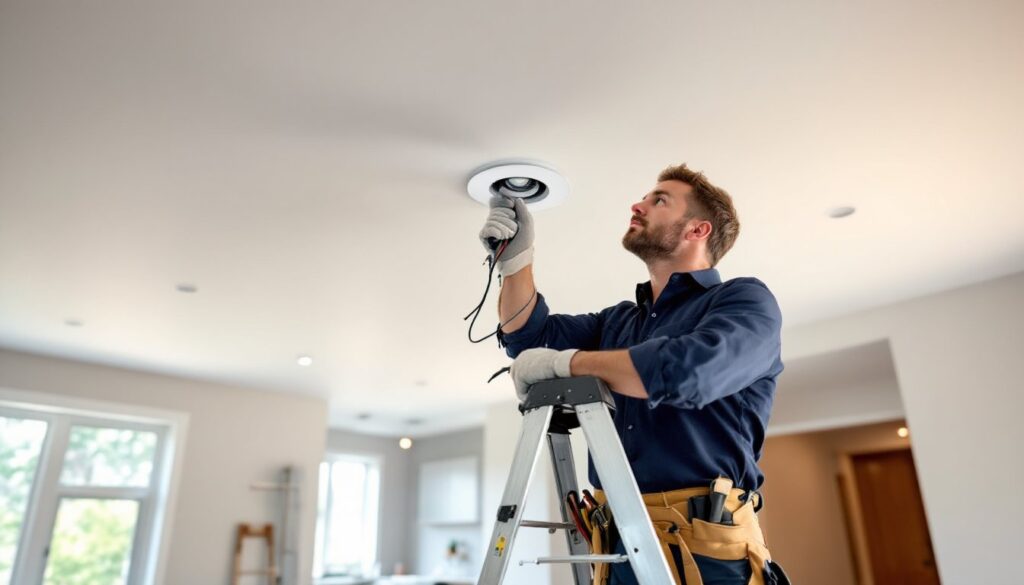
Recessed lighting, those flush-mounted fixtures that disappear into the ceiling, can modernize a room’s look while boosting functionality. But the cost of installing recessed lighting varies significantly depending on fixture type, ceiling accessibility, and whether you hire an electrician or tackle the job yourself. Most homeowners pay between $100 and $500 per fixture when labor and materials are included. Understanding what drives those costs helps you budget accurately and avoid surprise expenses when the project’s halfway done.
Table of Contents
ToggleKey Takeaways
- The cost of installing recessed lighting typically ranges from $100 to $500 per fixture depending on fixture type, ceiling accessibility, and whether you hire a professional or complete a DIY retrofit.
- A typical six-light kitchen installation averages $1,200 to $2,400 total, with fixture costs ($10–$150), labor ($50–$200), materials ($20–$50), and permits ($50–$200) as the primary expense categories.
- Retrofit housings are the most affordable option at $10–$40 per fixture and don’t require attic access, while new-construction housings offer better thermal performance but cost more and demand skilled installation.
- DIY installation can save $300 to $1,200 on a six-light project if you have attic access and can tap an existing circuit, but hiring a licensed electrician becomes essential for new circuits, complex ceilings, or installations exceeding four to six fixtures.
- Reducing recessed lighting installation costs can be achieved by choosing retrofit housings, buying multi-packs, grouping installations in one visit, and scheduling during off-season months when electrician discounts reach 10–15 percent.
- Professional installation ensures code compliance, includes liability insurance and one-year labor warranties, and protects your home’s resale value by avoiding unpermitted work that could derail inspections or sales.
Average Cost Breakdown for Recessed Lighting Installation
Nationally, the cost to install a single recessed light averages $180 to $220, though pricing swings from as low as $100 for a straightforward retrofit in an accessible ceiling to $500 or more for new-construction housings in a two-story home with limited attic access. Here’s how the numbers typically break down:
- Fixture cost: $10 to $150 per unit, depending on trim style, bulb type (LED integrated vs. replaceable), and features like dimming compatibility.
- Labor: $50 to $200 per fixture for a licensed electrician. Simple retrofits take 30 to 60 minutes per light: new-construction installations requiring wire runs, junction boxes, and drywall patching push labor higher.
- Materials: Wire (14/2 or 12/2 NM cable), junction boxes, connectors, and fasteners add $20 to $50 per fixture if running new circuits.
- Permits: $50 to $200 in jurisdictions requiring electrical permits. Not every municipality demands one for fixture replacement, but new circuits almost always do.
For a typical kitchen with six recessed lights on a new circuit, expect a total range of $1,200 to $2,400, including materials, labor, and permit fees. Pricing fluctuates by region, electricians in metro areas charge $75 to $125 per hour, while rural markets may run $50 to $80. Material costs have stabilized in 2026 after copper and semiconductor shortages in prior years, but LED driver chips still carry a premium for high-CRI or tunable-white fixtures.
Factors That Affect Your Total Installation Cost
Not all ceilings, or recessed lights, are created equal. These variables swing your final bill by hundreds of dollars.
Fixture Type and Quality
Retrofit housings (also called remodel cans) clip into an existing ceiling hole and don’t require attic access, making them the cheapest option at $10 to $40 per fixture. They’re ideal for finished spaces where you can’t easily reach joists from above.
New-construction housings mount directly to ceiling joists before drywall goes up, or in remodel scenarios where you cut a larger access hole and fasten the can between joists. These cost $15 to $60 and offer better thermal performance (look for IC-rated for insulated ceilings and AT-rated for airtightness).
LED integrated fixtures, where the diode array is permanent, run $30 to $150 but deliver 50,000-hour lifespans and lower energy bills. Replaceable-bulb housings cost less upfront ($10 to $50) but require periodic lamp swaps.
Smart fixtures with app control or tunable color temperature add $50 to $100 per light. Dimmer compatibility matters too, not all LED retrofits play nicely with older triac dimmers, sometimes requiring an ELV (electronic low-voltage) dimmer at $40 to $80 per switch.
Ceiling Material and Accessibility
Drywall ceilings with open attic access above are the easiest installs. An electrician can snake wire, position housings, and connect circuits in under an hour per fixture.
Popcorn or textured ceilings require careful cutting and often patching, adding $20 to $50 per fixture for drywall finishing.
Plaster-and-lath ceilings, common in pre-1950 homes, are fragile and time-consuming. Expect labor premiums of $50 to $100 per fixture and potential patching by a drywall specialist.
Cathedral or vaulted ceilings with no attic access demand strategic fixture placement and creative wire routing, sometimes fishing cable laterally between joists. Budget an extra $75 to $150 per fixture for the added complexity.
Concrete or steel-joist ceilings (typical in condos or mid-rise buildings) may prohibit recessed installs altogether, forcing you toward surface-mount or track lighting instead.
DIY vs. Professional Installation: Which Saves More Money?
Retrofit installations in accessible ceilings are within reach for confident DIYers. You’ll need a drill, a 4-inch or 6-inch hole saw, wire strippers, a voltage tester, and basic hand tools. Material costs run $30 to $80 per fixture if you’re tapping an existing circuit with capacity.
But DIY makes sense only if:
- You’re retrofitting into an existing circuit with spare amperage (calculate total wattage, most 15-amp bedroom circuits handle eight to ten 10-watt LED recessed lights).
- The ceiling is drywall with attic or crawlspace access above.
- Local code allows homeowner electrical work (some jurisdictions require licensed electricians for all wiring).
- You’re comfortable working with live circuits after shutting breakers and testing wires.
Wear safety glasses and gloves when cutting ceiling holes, drywall dust and insulation fibers are no joke. A dust mask rated N95 or better is essential if disturbing vermiculite or older insulation that may contain asbestos.
Hiring a pro becomes cost-effective, or mandatory, when:
- Running new circuits from the panel, which requires load calculations, proper breaker sizing, and NEC-compliant wire routing.
- Working in finished spaces without attic access, where fishing wire through walls or ceilings takes experience and specialized tools.
- Installing more than four to six fixtures, where an electrician’s efficiency offsets the hourly rate.
- Dealing with aluminum wiring, knob-and-tube, or outdated panels that need upgrades before adding load.
A licensed electrician carries liability insurance and pulls permits, protecting your home’s resale value. Unpermitted work discovered during a home inspection can derail a sale or force costly corrections. Professional installs on contractor platforms typically include one-year warranties on labor.
Bottom line: DIY saves $300 to $1,200 on a six-light project if you have the skills and access. Pros cost more upfront but eliminate risk, ensure code compliance, and finish faster.
How to Reduce Recessed Lighting Installation Costs
Smart planning trims expenses without sacrificing quality or safety.
Choose retrofit housings when possible. They’re faster to install and don’t require attic access, cutting labor by 30 to 50 percent compared to new-construction cans.
Tap existing circuits with spare capacity. Adding fixtures to a circuit already serving the room avoids the $200 to $600 cost of running a new home run from the panel. Use a clamp meter or consult an electrician to verify available amperage.
Buy fixtures in multi-packs. Six-packs of LED retrofit kits often cost $80 to $150, half the per-unit price of singles. Stick with reputable lines (Halo, Lithonia, Commercial Electric) that carry ETL or UL listings.
Group installations. Electricians often discount per-fixture labor when installing six or more lights in a single visit. Costs from project planning sites like ImproveNet suggest bundling multiple rooms drops the per-light rate by 15 to 25 percent.
Skip unnecessary features. Integrated LEDs with 90+ CRI and tunable white are gorgeous but pricey. Standard 80-CRI, 3000K fixtures deliver excellent light for kitchens, hallways, and baths at half the cost.
Do your own prep and finish work. If you’re handy, mark fixture locations, cut ceiling holes, and patch drywall after the electrician roughes in housings. This hybrid approach saves $100 to $300 on a multi-light job.
Schedule during the off-season. Electricians are less busy in late winter and early spring. Some offer 10 to 15 percent discounts for work booked in January through March.
Verify permit requirements early. Pulling your own homeowner permit (where allowed) costs $50 to $100 versus the $150 to $250 an electrician may charge to handle it. Check your local building department’s website or call ahead.
Conclusion
Installing recessed lighting transforms a space, but costs vary widely based on fixture choice, ceiling type, and labor complexity. Most homeowners spend $1,200 to $2,400 for a six-light setup, though DIY retrofits on existing circuits can drop that to $300 in materials alone. Whether you hire a pro or go it alone, prioritize code compliance, proper fixture ratings (IC and AT for insulated ceilings), and realistic assessment of your skills, skimping on safety or permits rarely saves money in the long run.